
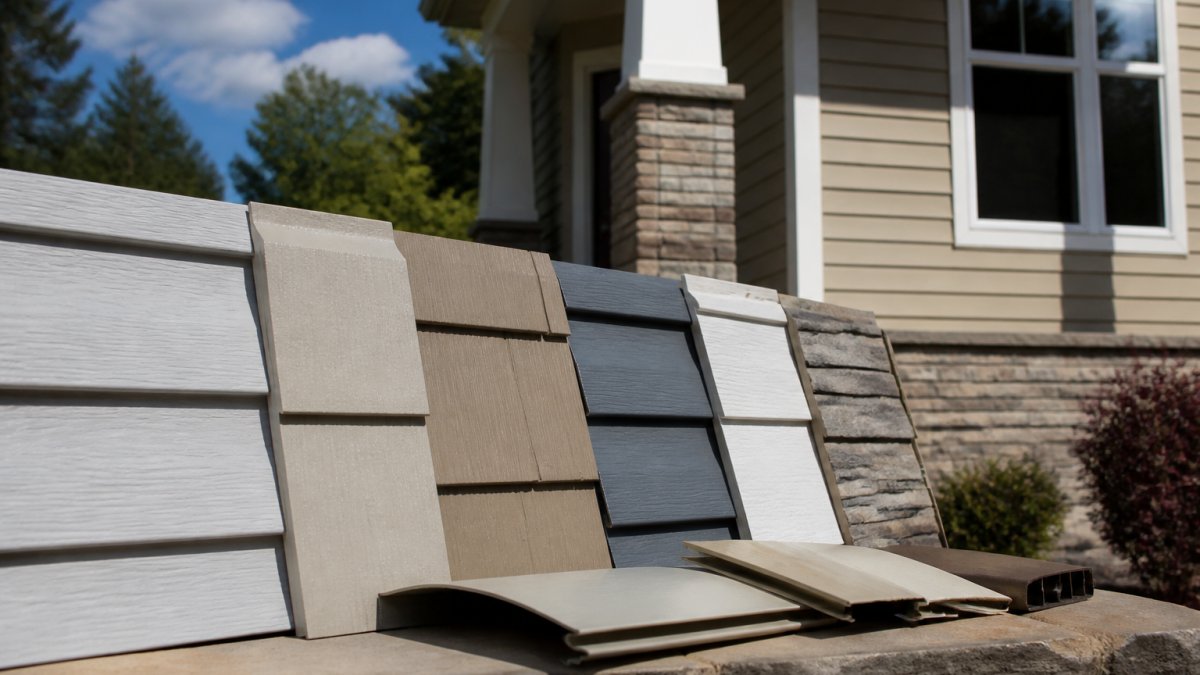
How to Choose the Best Exterior Siding Materials for Georgia
Last Updated: October 25, 2026
Quick Summary
The best exterior siding materials for Georgia handle moisture, UV exposure, and pest pressure at once. Vinyl, fiber cement, and stucco dominate because they balance these demands, and fiber cement resists rot and termites while lasting 30-50 years.
- Vinyl was the principal exterior wall material on 27.7% of homes started in 2025, per the National Association of Home Builders.
- Fiber cement needs repainting every 8-12 years but resists rot, termites, and moisture damage.
- A 2,000-square-foot home typically has 1,800 to 2,400 square feet of exterior wall area.
- Coastal homes in wind-borne debris regions pay 10-20% more for rated products and fasteners.
- A code-compliant weather-resistive barrier behind the siding is the most common inspection correction item.
Table of Contents
- What Georgia's Climate Demands From Siding Materials
- The Best Siding for Hot Humid Climates: How the Top Options Compare
- Vinyl Siding vs Fiber Cement: Which Wins for Georgia Homes
- Fiber Cement Siding Pros and Cons for Southern Homes
- Siding Replacement Cost for a 2,000-Square-Foot House
- Georgia Building Codes, Permits, and Wind Requirements for Siding
- Matching Siding Materials to Your Home Type and Budget
- Getting a Siding Quote From Exterior & Interior Solutions
- Frequently Asked Questions
What Georgia's Climate Demands From Siding Materials
Choosing the best exterior siding materials for Georgia starts with one fact: your walls face heat, humidity, and heavy rain most of the year. At Exterior & Interior Solutions, we've installed and replaced siding across the state for more than two decades, and the failures we see rarely come from bad products, they come from materials mismatched to the climate.
Siding materials are the protective outer layer fixed to a home's frame, and in Georgia that layer must handle moisture, UV exposure, and pest pressure at once. Three demands drive every decision:
- Moisture management. Long humid summers and driving rain push water against walls. Siding must shed it and let the wall assembly dry.
- Heat and UV exposure. Constant sun fades cheap finishes and warps panels that aren't rated for it.
- Pest resistance. Termites and wood-destroying insects are a real risk, so wood products need clearance from soil and regular inspection.
Get these three right and your siding lasts. Get them wrong and you'll be repairing within a few years.
The Best Siding for Hot Humid Climates: How the Top Options Compare
The best siding for hot humid climates balances moisture resistance, durability, and repairability, and no single material wins on every count. The National Association of Home Builders exterior materials report found that among homes started in 2025, vinyl was the principal exterior wall material on 27.7%, stucco on 24.1%, and fiber cement on 22.6%.
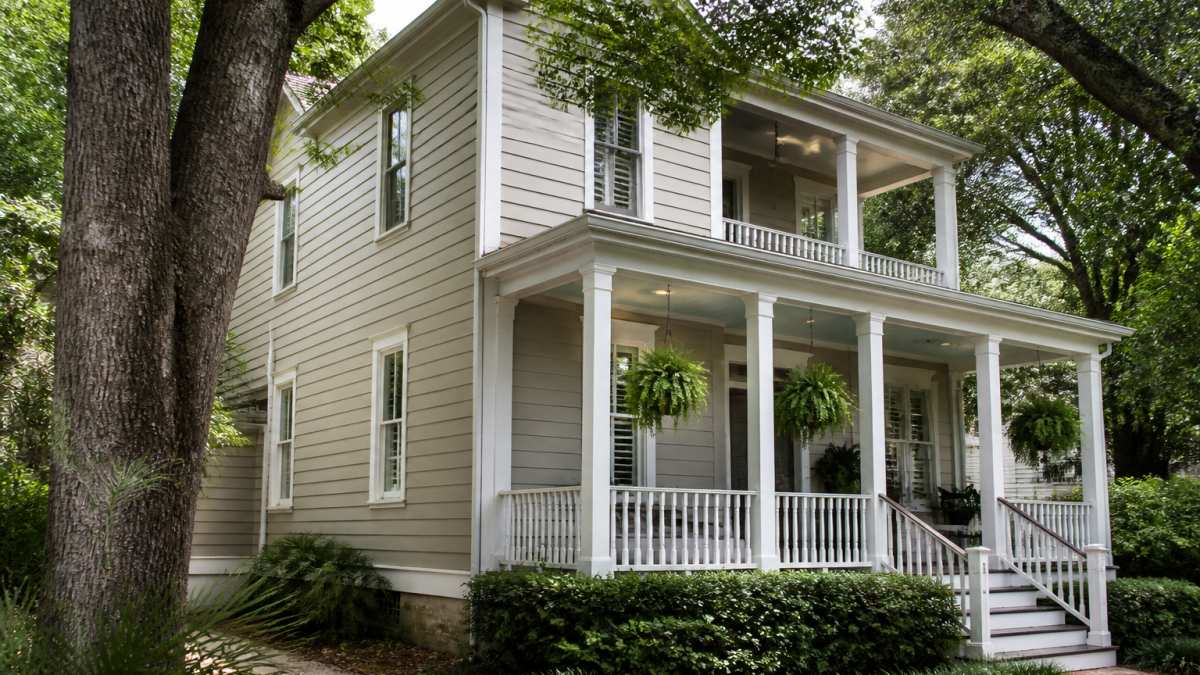
Here's how the main options stack up for Georgia homes:
| Material | Moisture Behavior | Lifespan | Maintenance | Best For |
|---|---|---|---|---|
| Vinyl | Water-resistant, needs vented walls | 20-30 years | Wash annually | Budget-conscious owners |
| Fiber cement | Resists rot, needs paint upkeep | 30-50 years | Repaint every 8-12 years | Long-term owners |
| Stucco | Excellent when detailed right | 50+ years | Inspect for cracks | Traditional styles |
| Brick/stone veneer | Highly water-tolerant | 50+ years | Minimal | Curb appeal, resale |
| Wood/cedar | Rot-prone in humidity | 15-25 years | Stain or paint often | Accent areas only |
| Engineered wood | Better than solid wood | 20-30 years | Regular sealing | Mid-range budgets |
Moisture, Mold, and Termite Risk by Material
Moisture is where Georgia separates good siding from bad. Vinyl sheds water but traps it behind the panels if the wall isn't vented, which is why proper housewrap and flashing matter more than the panel itself. Fiber cement resists rot and termites outright, but still needs caulked joints and a painted surface. Stucco performs well with correct weep screeds and control joints; skip those and cracks invite water in. Wood and cedar carry the highest risk: they absorb humidity, feed termites, and need clearance from soil.
Vinyl Siding vs Fiber Cement: Which Wins for Georgia Homes
Vinyl wins on upfront cost and low maintenance, while fiber cement wins on durability and appearance, so the right pick depends on how long you plan to stay.
A common mistake is comparing sticker prices only. Factor in repainting, repairs, and lifespan, and fiber cement often closes the gap over 20 years. Selling in five years? Vinyl makes sense. Forever home? Fiber cement usually does.
Fiber Cement Siding Pros and Cons for Southern Homes
Fiber cement siding pros and cons come down to a tough, rot-resistant panel that demands proper installation and periodic repainting. Made from cement, sand, and cellulose fibers, it's one of the most popular choices in the South.
Pros:
- Resists rot, termites, and moisture damage
- Holds paint significantly longer than wood
- Handles heat and humidity well
- Comes in lap, shingle, and panel styles for strong curb appeal
Cons:
- Higher material and installation cost than vinyl
- Heavy, so it needs correct fastening
- Requires repainting every 8-12 years
- Poor installation shows, especially at joints
For Southern homes, fiber cement earns its place. The Nichiha guide to siding for Southern homes names stucco, fiber cement, and wood as its top three materials for the region, which shows there's more than one right answer.
Siding Replacement Cost for a 2,000-Square-Foot House
Siding replacement cost for a 2,000-square-foot house depends on material, accessibility, and how much repair the existing walls need.
| Material | Installed cost per square | Typical whole-house range (2,000 sq ft home) |
|---|---|---|
| Vinyl (standard) | $350-$650 | $8,000-$15,000 |
| Vinyl (premium / insulated) | $600-$900 | $13,000-$21,000 |
| Fiber cement | $700-$1,200 | $15,000-$28,000 |
| Engineered wood | $650-$1,100 | $14,000-$25,000 |
| Cedar / natural wood | $900-$1,600 | $20,000-$38,000 |
| Stucco (three-coat) | $900-$1,500 | $20,000-$35,000 |
| Brick veneer | $1,200-$2,200 | $28,000-$52,000 |
| Stone veneer | $1,400-$2,600 | $32,000-$60,000 |
These bands assume removal and disposal of one existing layer, standard access, and a sound wall assembly once the old siding comes off.
What moves the number most in this state:
- Wall condition after tear-off. Rotted sheathing, failed housewrap, or old termite damage is common on pre-1990s homes. Remediation can add to the overall cost before a single panel goes up.
- Coastal product requirements. Homes in wind-borne debris regions need products and fasteners rated for higher design pressures, pushing material cost up 10-20% versus inland.
- Historic districts and HOA review. In a locally designated district or an HOA with architectural review, expect design-review fees and possible material substitutions that change the bid.
- Stories, dormers, and gables. Two-story walls, complex rooflines, and lots of corners add labor. A simple rectangle is the cheapest wall you can build.
- Trim and soffit scope. Replacing fascia, soffit, and window trim alongside siding can add to the project.
- Season. Late-spring and summer schedules book out; off-season scheduling sometimes buys a better labor rate, though material prices don't move much.
How to compare bids fairly. Ask each contractor to itemize material brand and product line, wall square footage, removal and disposal, housewrap and flashing, trim, and any repair allowance. A bid that is lower usually excludes tear-off, skips the drainage plane, or assumes no sheathing repair. Compare the scopes, not the totals.
Long-term value math. Vinyl is cheapest upfront but typically needs replacement in 20-30 years and can fade or warp in sustained sun.
Georgia Building Codes, Permits, and Wind Requirements for Siding
Georgia building codes require permits for most siding replacement and set wind-resistance and moisture-barrier standards that vary by jurisdiction.
The four things inspectors actually look at:
- Weather-resistive barrier (WRB). A code-compliant housewrap or equivalent must sit behind the siding, lapped shingle-style so water drains down and out, the single most common correction item on a siding inspection.
- Flashing. Head flashing at windows and doors, kick-out flashing at roof-wall intersections, and proper termination at the foundation. Missing kick-out flashing is a classic source of hidden rot.
- Fastening. Nail or screw schedule, embedment, and spacing per the manufacturer's installation instructions. Inspectors check that the fastener matches the substrate and the product rating.
- Clearance. Siding held off the ground and off roof surfaces per manufacturer specs, so the wall can dry.
Permits. Many jurisdictions require a permit for full siding replacement, and some for partial replacement above a threshold.
Wind requirements. Wind exposure is where location matters most. The IRC maps the state into wind zones, and coastal counties carry higher design wind speeds than inland counties. In practical terms:
- Inland and metro areas generally fall in lower wind zones, where standard fastening per the manufacturer's instructions is usually sufficient.
- Coastal and storm-prone counties carry higher design pressures. Products, fasteners, and installation details must be rated for those pressures, and some jurisdictions require a sealed design or product approval documentation.
- Wind-borne debris regions near the coast may require impact-rated products or specific opening protection, which affects both product selection and cost.
Confirm the design wind speed for your address with your local building department before ordering material.
Moisture barriers and drainage details. A proper WRB behind the siding is code for a reason, and so is the drainage plane. In a climate with long humid summers and driving rain, the wall assembly has to dry, which means the WRB, flashing, and vented or drained cavity details work together, skipping any one undermines the others.
How to verify your requirements. Call your county or city building department with your address and scope of work.
Matching Siding Materials to Your Home Type and Budget
The right siding depends on your home's style, budget, and plans for the property, a rental flip and a forever home need different answers.
- Rental or resale property: vinyl delivers the best return, with low maintenance and a clean look.
- Long-term family home: fiber cement balances durability and appearance.
- Traditional or high-end home: brick, stone veneer, or stucco boost curb appeal and resale value.
- Accent areas: cedar or engineered wood on gables adds texture without full-wall risk.
Whatever the budget, prioritize the details you can't see: housewrap, flashing, and correct fastening. Those protect the investment more than the panel color ever will.
Getting a Siding Quote From Exterior & Interior Solutions
A good siding quote starts with a contractor who inspects the walls, explains the moisture plan, and puts the scope in writing. Before you request a quote, review these tips for hiring a renovation contractor.
At Exterior & Interior Solutions, we bring more than two decades of experience to every exterior job. We install siding as part of full exterior upgrades, from rental-grade finishes to high-end custom work, and we walk you through material options, code requirements, and timelines before work begins.
Frequently Asked Questions
What is the strongest siding for a house in Georgia?
Fiber cement is the strongest of the common options for Georgia homes. It resists rot, holds paint longer than wood, and stands up to hail and wind better than vinyl. That said, stucco and brick also perform well here. The right pick depends on your budget, the style of your house, and how much maintenance you are willing to take on over the next 20 years.
Is fiber cement or vinyl siding better for a Georgia home?
Vinyl costs less upfront and needs almost no upkeep beyond occasional washing, which suits rental properties and tight budgets. Fiber cement lasts longer, takes paint better, and handles heat and moisture with fewer issues over time. For a long-term primary residence, fiber cement usually wins on lifecycle value. For a quick flip or rental, vinyl is often the smarter spend.
Which siding materials hold up best in hot, humid weather?
Fiber cement, stucco, and brick handle Georgia's heat and humidity best because they do not feed mold or termites the way wood does. Vinyl also performs well in humidity but can warp in extreme heat if installed too tightly. Engineered wood sits in the middle: better than natural wood, but it still needs careful sealing and regular inspection around seams and joints.
How much does it cost to put siding on a 2,000-square-foot house?
Siding replacement cost for a 2,000-square-foot house depends on the material, the number of stories, how much trim and repair work is needed, and whether old siding has to be removed first. Get an itemized quote so removal, trim, and disposal are all spelled out.
Georgia's humidity and heat punish the wrong siding choice, and the mistakes show up years later as rot, fading, and failed inspections. Exterior & Interior Solutions brings over two decades of experience, 700+ completed projects, and a process built around custom finishes that match your budget, from rental-grade to high-end. Get started with Exterior & Interior Solutions and protect your home's exterior with siding chosen for this climate.

